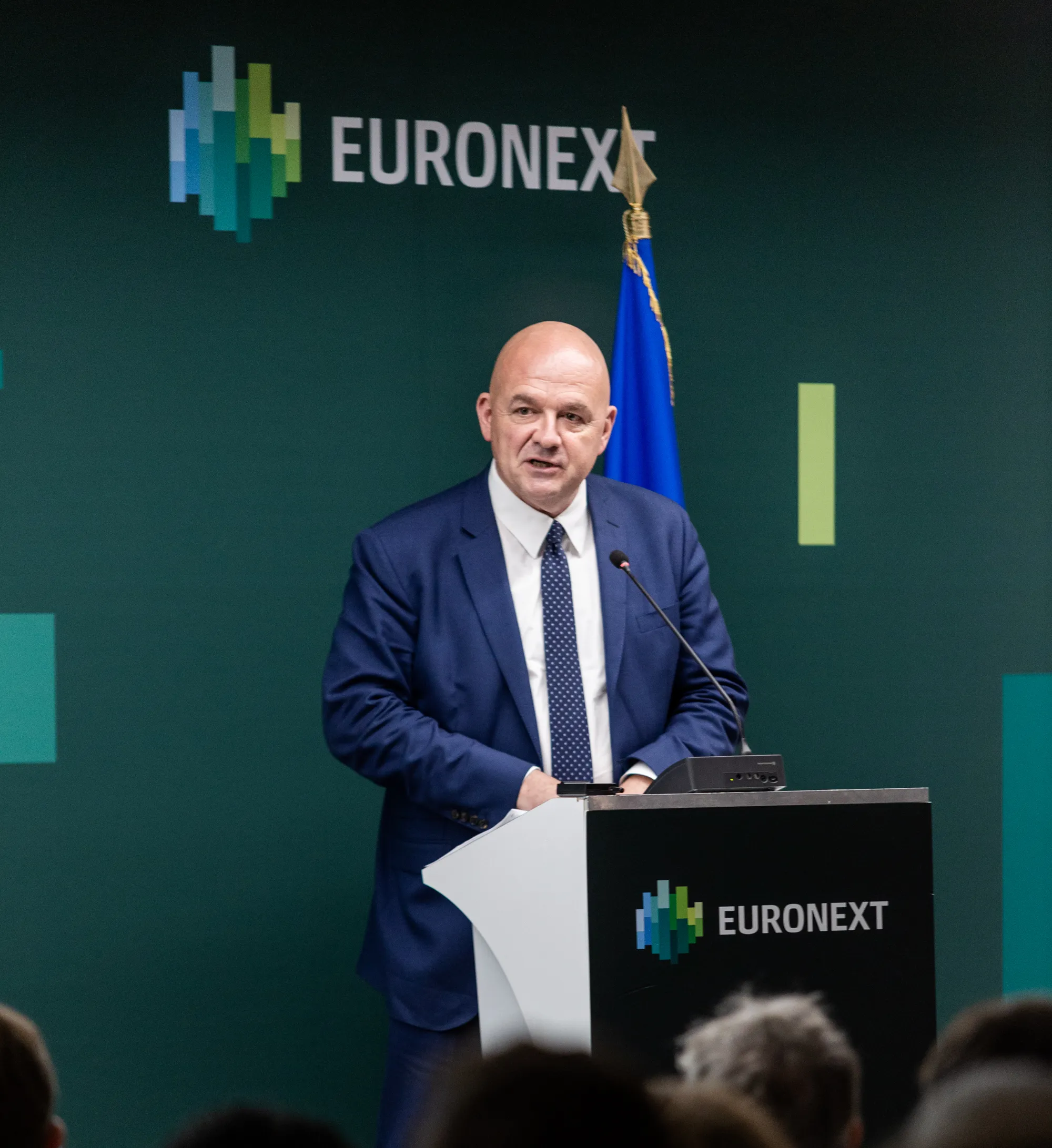
European financial markets are seeing renewed merger speculation after Euronext CEO Stéphane Boujnah said he was open to a potential business combination with rival Deutsche Börse.
Boujnah said that combining the two exchange businesses could create a larger pan-European market infrastructure. However, there are currently no active negotiations between Euronext and Deutsche Börse.
The comments have revived long-running speculation about consolidation among Europe’s major financial exchanges while highlighting the potential strategic benefits and significant regulatory challenges associated with any future transaction.
Quick-Hit Insights
- The Vision: Boujnah said combining the two groups’ exchange businesses could make strategic sense and help bring Europe’s fragmented equity markets closer together.
- The Reality Check: No formal merger discussions or negotiations are currently taking place.
- Regulatory Hurdles: Any potential transaction would face significant antitrust and regulatory scrutiny, particularly given the history of blocked European exchange combinations.
- Leadership Timeline: Boujnah is scheduled to step down as CEO in May 2027, and no successor has yet been selected.
What Did Stéphane Boujnah Actually Say?
In an interview with the Financial Times, Boujnah said he was open to a potential combination with Deutsche Börse. He specifically identified a merger of the companies’ exchange businesses as a transaction that could make strategic sense and could contribute to deeper and more integrated European equity markets.
He also did not rule out a broader combination between the two companies.
At the same time, Boujnah acknowledged that any transaction would face significant regulatory and antitrust hurdles. Deutsche Börse confirmed that no discussions with Euronext are currently taking place.
For now, the development remains strategic speculation rather than an active merger process.
Why a Potential Combination Matters
Euronext operates exchanges across multiple European countries, including France, the Netherlands, Italy and Ireland, while Deutsche Börse operates the Frankfurt Stock Exchange and Eurex.
Europe’s capital markets remain fragmented across national boundaries. Supporters of greater integration argue that combining the two groups could potentially increase market liquidity, create greater operational scale and strengthen European financial-market infrastructure.
However, these are potential benefits rather than guaranteed outcomes. The actual impact would depend on the structure of any future transaction, regulatory approval, market conditions and successful business integration.
Historical Precedents and Regulatory Challenges
European exchange consolidation has faced significant regulatory obstacles in the past:
- 2012: The European Commission blocked the proposed combination of Deutsche Börse and NYSE Euronext on competition grounds.
- 2017: The European Commission also blocked the proposed merger between Deutsche Börse and London Stock Exchange Group.
These previous decisions do not automatically determine the outcome of any future Euronext–Deutsche Börse transaction. They do, however, demonstrate why competition policy and regulatory oversight would be central considerations in any potential deal.
The Leadership Factor at Euronext
Timing is another factor.
Boujnah is scheduled to step down as Euronext CEO in May 2027, and a successor has not yet been selected. A future CEO could have different strategic priorities, meaning Boujnah’s current openness to a Deutsche Börse combination does not guarantee that Euronext’s next leadership team would pursue the same approach.
Investor Reaction
European investors responded positively to the renewed merger speculation.
By 09:44 GMT on September 14, Euronext shares had gained 2.1%, while Deutsche Börse shares had risen 2.9%, according to Reuters. Both companies’ shares were also up about 26% for the year at that point.